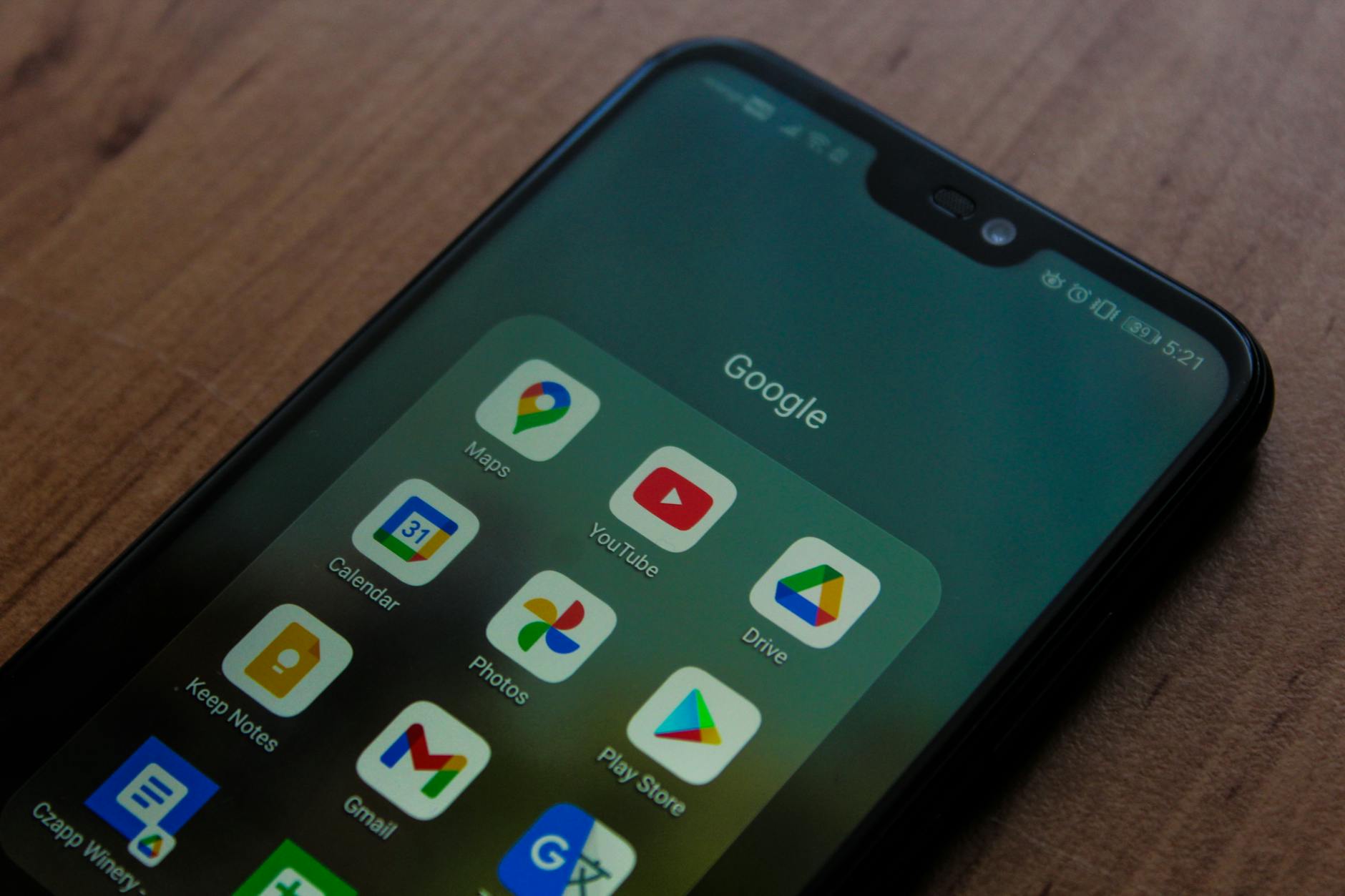
Short answer: yes, if you can get it under about $430. The Pixel 10a replaced it at $499 and runs the same Tensor G4 chip, so you are paying roughly $70 for a newer case and a slightly different screen. The 9a keeps the bigger battery figure and the brighter panel on paper. For most people it is now the better buy of the two.
Buy the 10a instead only if you want the longest possible update window, or if the price gap closes to under $30.
Pixel 9a vs Pixel 10a: The Actual Decision
This is the comparison that matters in 2026, because these are the two phones you are choosing between on Google’s own store.
| Pixel 9a | Pixel 10a | |
|---|---|---|
| Typical price | ~$425 and falling | $499 |
| Chipset | Tensor G4 | Tensor G4 — the same one |
| Display | 6.3″ 120Hz, 2,700 nits peak | 120Hz OLED, ~2,000 nits |
| Battery | 5,100 mAh | Comparable |
| Update window | 7 years from March 2025 | 7 years from 2026 |
| Water resistance | IP68 | IP68 |
The headline is that Google shipped the 10a on the previous generation’s silicon. The rest of the Pixel 10 line moved to the Tensor G5; the A-series did not. So the usual reason to buy the newer model — it is faster — does not apply here.
What you actually gain by paying the extra is about a year of additional security updates at the far end of the support window, in 2032 rather than 2031. That is worth something, but it is worth it in 2031, not now.
Full Specifications
| Component | Spec |
|---|---|
| Display | 6.3″ P-OLED, 1080 × 2424, 120Hz, up to 2,700 nits peak |
| Chipset | Google Tensor G4 |
| Memory | 8 GB RAM |
| Storage | 128 GB or 256 GB, no microSD |
| Main camera | 48 MP, optical stabilisation |
| Ultrawide | 13 MP, f/2.2 |
| Telephoto | None |
| Battery | 5,100 mAh — the largest fitted to any Pixel |
| Wired charging | 23 W |
| Wireless charging | 7.5 W |
| Water resistance | IP68 |
| Released | March 2025 at $499 |
| Support until | March 2032 (7 years of OS and security updates) |
The Camera
The 48 MP main sensor is the reason to buy this phone. Not because the hardware is exceptional — it is a competent mid-range sensor — but because Google’s processing is doing work that its rivals at this price are not.
In practice that means three things:
- Exposure in difficult light. Backlit subjects, indoor shots against a window, faces in shade — the situations where cheaper phones blow the highlights or lose the face entirely.
- Night Sight. Still the best low-light output you can get on a phone at this price, by a visible margin rather than a pixel-peeping one.
- Consistency. Shots look like each other. Colour and contrast do not lurch between frames the way they do on phones that lean on scene detection.
What you do not get is a telephoto lens. Zoom past 2× and you are cropping into the main sensor. It holds up to about 2× and degrades after that. If zoom matters to you, this is the wrong phone and no amount of processing fixes it.
Video reaches 4K 60fps with good stabilisation. It is fine. It is not the reason you buy this.
Battery
5,100 mAh is the largest battery Google has put in a Pixel, and it is the single most improved thing about the 9a compared with earlier A-series phones. Moderate use gets you comfortably through a day with meaningful charge left; light use gets close to two days.
Charging is 23 W wired, which is unremarkable in 2026 — mid-range phones from OnePlus and Realme charge two to three times faster. If you charge overnight this is irrelevant. If you rely on topping up for twenty minutes before going out, you will notice it.
Wireless charging is present at 7.5 W. That is slow, but many phones at this price omit it entirely.
Performance
The Tensor G4 is not a fast chip by 2026 standards, and Google is not pretending otherwise — it put the same chip in this year’s model.
For everyday use it is genuinely fine: messaging, browsing, video, maps, camera, split-screen multitasking. Nothing here strains it.
Where it falls behind is sustained 3D gaming. Demanding titles run, but frame rates drop as the phone warms up, and a similarly priced phone with a Snapdragon chip will hold a higher average. If you play graphically heavy games for long sessions, buy something else.
Where Tensor earns its place is on-device processing — live transcription, Call Screen, translation, the photo editing tools. These run locally and quickly, and they are the features you actually use day to day.
Display
6.3 inches, 120Hz, and a peak brightness figure of 2,700 nits. That last number is the one that matters: it is what makes the screen readable in direct sunlight, and it is unusually good for the price bracket.
Note that peak brightness is measured on a small portion of the screen showing HDR content. Full-screen brightness in ordinary use is lower. The practical point stands — this panel handles bright outdoor conditions better than most phones near this price.
Software and Support
Seven years of OS and security updates from a March 2025 release means support through March 2032. Buying the phone in late 2026 still leaves you more than five years of updates, which is longer than most people keep a phone and longer than nearly anything else at this price offers.
This is the strongest argument for the 9a as a purchase. A cheaper phone that stops receiving security patches in two years is not cheaper; it is a phone you replace twice as often.
What Is Wrong With It
Being straightforward about the drawbacks, because they are real:
- No telephoto. The most-missed omission. Zoom is a crop.
- 23 W charging is slow for 2026, and 7.5 W wireless is slower still.
- The chip is two generations old and was already mid-tier when it shipped. Heavy gaming exposes it.
- No microSD slot. Choose 256 GB if you keep a lot of video.
- The design is plain. If you want a phone that feels expensive in the hand, this is not it.
Who Should Buy It
- Buy the 9a if you want the best point-and-shoot camera under $450, you charge overnight, and you want a phone that still gets security updates in 2031.
- Buy the Pixel 10a if the price difference drops below about $30, or if you want the update window to run a year longer.
- Buy something else if you game seriously, need optical zoom, or charge in short bursts during the day. A OnePlus or Realme at the same price will serve you better on all three.
Frequently Asked Questions
Is the Pixel 9a still worth buying in 2026?
Yes, if the price is meaningfully below the Pixel 10a’s $499. The 10a uses the same Tensor G4 processor, so you are not buying more performance — you are buying a later start date on the update window. At around $425 the 9a is the better value.
What is the difference between the Pixel 9a and the Pixel 10a?
Less than the names suggest. Same chipset, both IP68, both seven years of updates, both 120Hz. The 9a is cheaper and quotes a higher peak brightness; the 10a is newer and so its support window ends later.
How long will the Pixel 9a get updates?
Until March 2032 — seven years from its March 2025 release, covering both Android version upgrades and security patches.
Does the Pixel 9a have a good camera?
The best you can get under $450, with the caveat that this is about software rather than sensor hardware. It excels at difficult lighting and low light. It has no telephoto lens, so zoom beyond roughly 2× degrades.
How fast does the Pixel 9a charge?
23 W wired and 7.5 W wireless. Slow by 2026 standards. A full charge takes well over an hour, so this suits overnight charging rather than quick top-ups.
Is the Pixel 9a good for gaming?
For casual games, yes. For demanding 3D titles, it runs them but throttles under sustained load. A Snapdragon phone at the same price will hold higher frame rates.
Does the Pixel 9a have a headphone jack or microSD slot?
Neither. Storage is fixed at purchase, so pick 256 GB if you shoot a lot of video.
The Bottom Line
The Pixel 9a is a phone with one outstanding feature, one excellent feature, and a set of ordinary ones. The camera is outstanding for the money. The seven-year update commitment is excellent. Everything else — chip, charging, design — is adequate.
That is a good trade at $425. It was a reasonable trade at $499. What makes it interesting in 2026 is that its replacement runs the same processor, which means the older phone is not really the compromise the model numbers imply.

✍️ Leave a Comment